Back

Consulting & Strategy : LG.com E-commerce

Global UX Consulting for Template Standardization

Role
Product designer
Team
PM
UX Strategist 3
Product Designer 3
Practices
User Research
UX Framework
UX Strategy
Prototyping
Methods & Tool
Problem Definition
Competitor Analysis
Figma
Zoom
page2 image1

Overview

What is LG.com and what was the background and motivation for this project?

  • OverviewLG Electronics' global e-commerce platform. Outside of Korea and the U.S.72 countries operated on non-standardized templates, resulting in inconsistent brand experiences across markets. This project was initiated to establish a unified global customer experience.
  • Project Goal

    To expand global standards and guidelines across 72 countries, with four key objectives.

    01.Improving purchase conversion rates
    02.Implementing new customer service strategies
    03.Premium product lines
    04.Applying updated brand communication guidelines
  • OverviewConsultng → Planning →Design
    ScopDevelopment and post-launch optimization
  • Excluded
    ·
    Immediate Impact : Increased Conversion Rates by resolving payment and technical isses.
    ·
    Mid-term Impact : Enhanced Customer Satisfaction.
    ·
    Long-term Impact : Strengthened Brand Trust

Challenge

Developed a strategic framework for LG.com's global expansion by analyzing objectives and defining clear direction with measurable outcomes.

01. Brand Foundation

Painpoint

Difficulty establishing a clear visual identity.Inconsistent brand expression across countries and channels

Solution
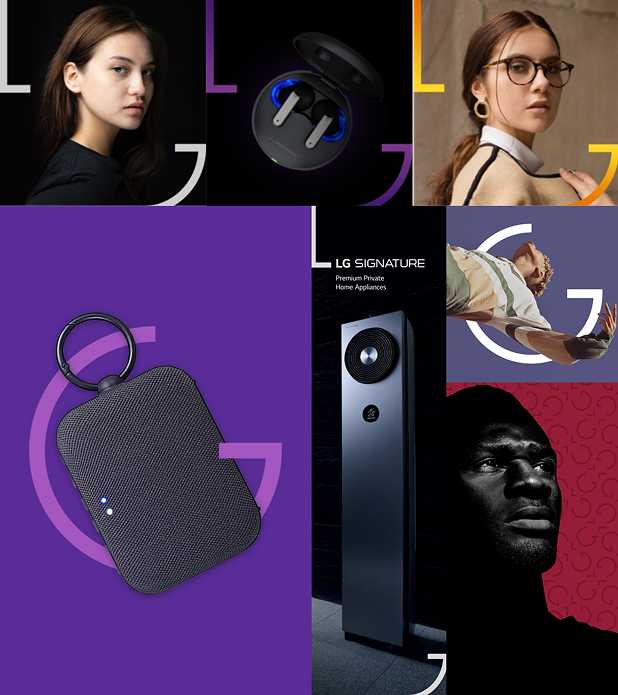
Provide a unified LG.com visual language for digital identity.
·
Define core design principles based on the LGness foundation
·
Strengthen visual identity guidelines for digital platforms

02. Content Strategy

Painpoint

Disconnected content narrative.Customers must take unnecessary additional steps to access required information.

Solution
Provide customer-centric storytelling content.
·
Develop new content planning and creation guidelines
·
Offer region-specific 3D visual asset libraries

03. Customer Experience

Painpoint

Difficulty addressing diverse customer needs.Customers are required to invest significant effort to access relevant information, often resulting in failure.

Solution
Enable a seamless experience based on customer needs.
·
Consider customer needs and behaviors
·
Matrix structured navigation
·
Intuitive information architecture and interactions
page2 image02

Research & Validation

Our UX/UI redesign began with customer research. We analyzed competitors
and consumer behavior based on UK market to identify key needs and patterns.

Painpoint

Customers require actionable product informations to make informed purchase decisions. Based on this insight, we developed a standardized content structure byproduct category and aligned it with the design implementation.

page2 image03

Collaboration

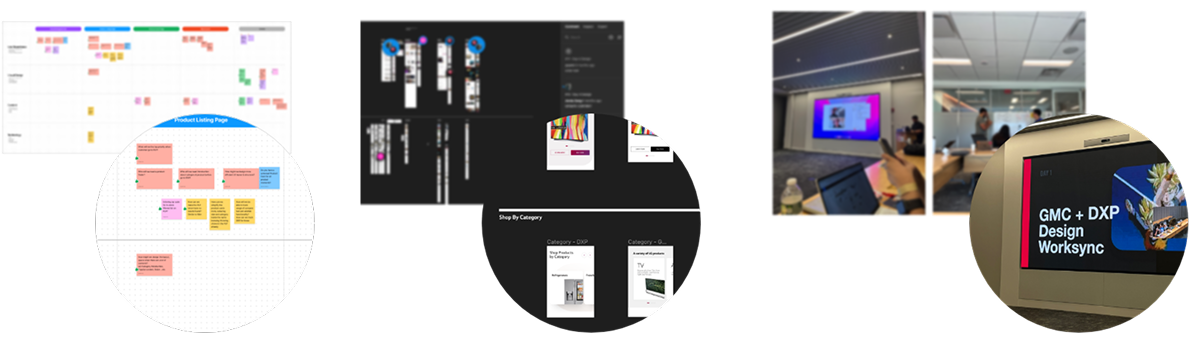
How we aligned US HQ services with a global design system with real-time feedback,
live collaboration, and decisions made across countries.

Global Alignment

Real-Time Ideation Warm-Up:

Dive into Branding, Features
& Components across Countries.

Component Standardization

Standardized core journeys
(Home, PLP, PDP, PBP) across markets.

·
Conducted flow gap analysis
·
Consolidated component logic and interaction patterns
·
Defined Global vs. Localizable vs. Optional modules

Governance & Scalability

Built a scalable template system
beyond visual alignment.
·
Structured reusable component library
·
Implemented validation loop with local teams
page2 image04

Core UX Design

Architecting the framework that brings every layer of the user experience into one cohesive structure.

01. CX Framework Definition

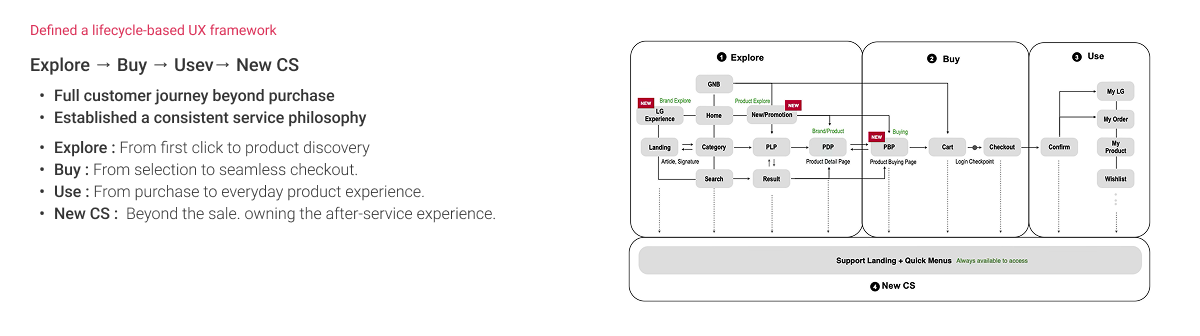
  • Defined a lifecycle-based UX framework

    Explore → Buy → Usev→ New CS
    ·
    Full customer journey beyond purchase
    ·
    Established a consistent service philosophy
    ·
    Explore : From first click to product discovery
    ·
    Buy : From selection to seamless checkout.
    ·
    Use : From purchase to everyday product experience.
    ·
    New CS : Beyond the sale. owning the after-service experience.
  • page2 image05

02. UX Architecture Development

  • Translated the framework into :

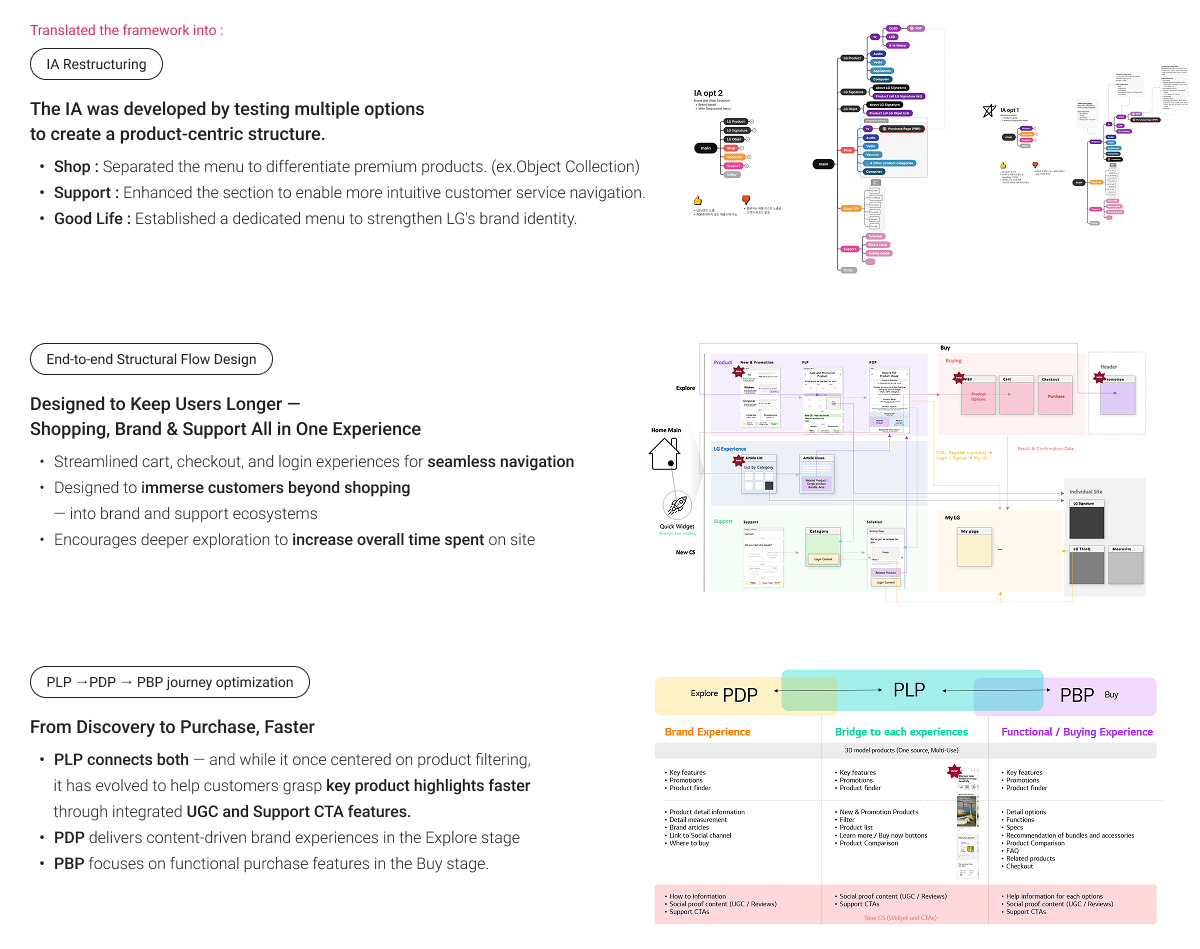
    IA Restructuring

    The IA was developed by testing multiple options
    to create a product-centric structure.
    ·
    Shop : Separated the menu to differentiate premium products.
    (ex.Object Collection)
    ·
    Support : Enhanced the section to enable more intuitive customer
    service navigation.
    ·
    Good Life : Established a dedicated menu to strengthen LG's brand identity.
  • page2 image06
  • End-to-end Structural Flow Design

    Designed to Keep Users Longer Shopping, Brand & Support
    All in One Experience
    ·
    Streamlined cart, checkout, and login experiences for seamless navigation
    ·
    Designed to immerse customers beyond shopping
    into brand and support ecosystems
    ·
    Encourages deeper exploration to increase overall time spent on site
  • page2 image07
  • PLP →PDP → PBP journey optimization

    From Discovery to Purchase, Faster

    ·
    PLP connects both and while it once centered on product filtering,
    it has evolved to help customers grasp key product highlights faster
    through integrated UGC and Support CTA features.
    ·
    PDP delivers content-driven brand experiences in the Explore stage
    ·
    PBP focuses on functional purchase features in the Buy stage.
  • page2 image08

03. Wireframing

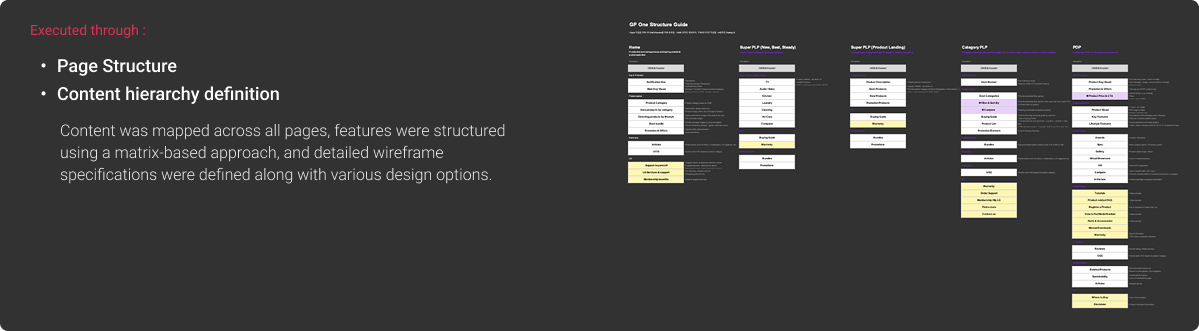
  • Executed through :

    ·
    Page Structure
    ·
    Content hierarchy definition

    Content was mapped across all pages, features were structured
    using a matrix-based approach, and detailed wireframe
    specifications were defined along with various design options.

  • page2 image09

Key UI Design

PLP : Connecting brand experience and purchase decision. Designed to help customers find the right product with confidence and speed.

Customer Jobs
·
Intuitively filter and narrow down to the right product match.
·
Validate product fit across budget, specs, and
lifestyle before committing.
Solution
Hierarchy Redefinition to Drive Faster Purchase Decisions
·
Restructured flow: Product Name → Options → Price → Buying or PLP CTA
·
Eliminated oversized Buying buttons that disrupted visual focus
·
Delivered product features through intuitive image (true to life)
·
Created a visually seamless and natural browsing flow
  • Previous

    Broken Visual Hierarchy, Burying Key Information

    ·
    Key product information, pricing, and purchase CTA lack visual clarity.
    ·
    Critical content fails to fit within a single mobile viewport.
    page2 image10
  • Redesigned

    Customer Experience Focus

    ·
    Also integrated regulatory requirements, such as European energy efficiency labeling, into our design framework.
    ·
    Providing quick access(CTA) to relevant content beyond products, including promotions, brand story, and support.
    page2 image11

    Added Filter : Introduced two view modes for mobile

    ·
    Information-focused layout
    ·
    Image-focused layout to browse multiple products at a glance.
    • Provided two customer flow from

      ·
      PDP for Brand experience
    • PLP for immersive customer behavior.

      ·
      PBP for Buying experience

Design system

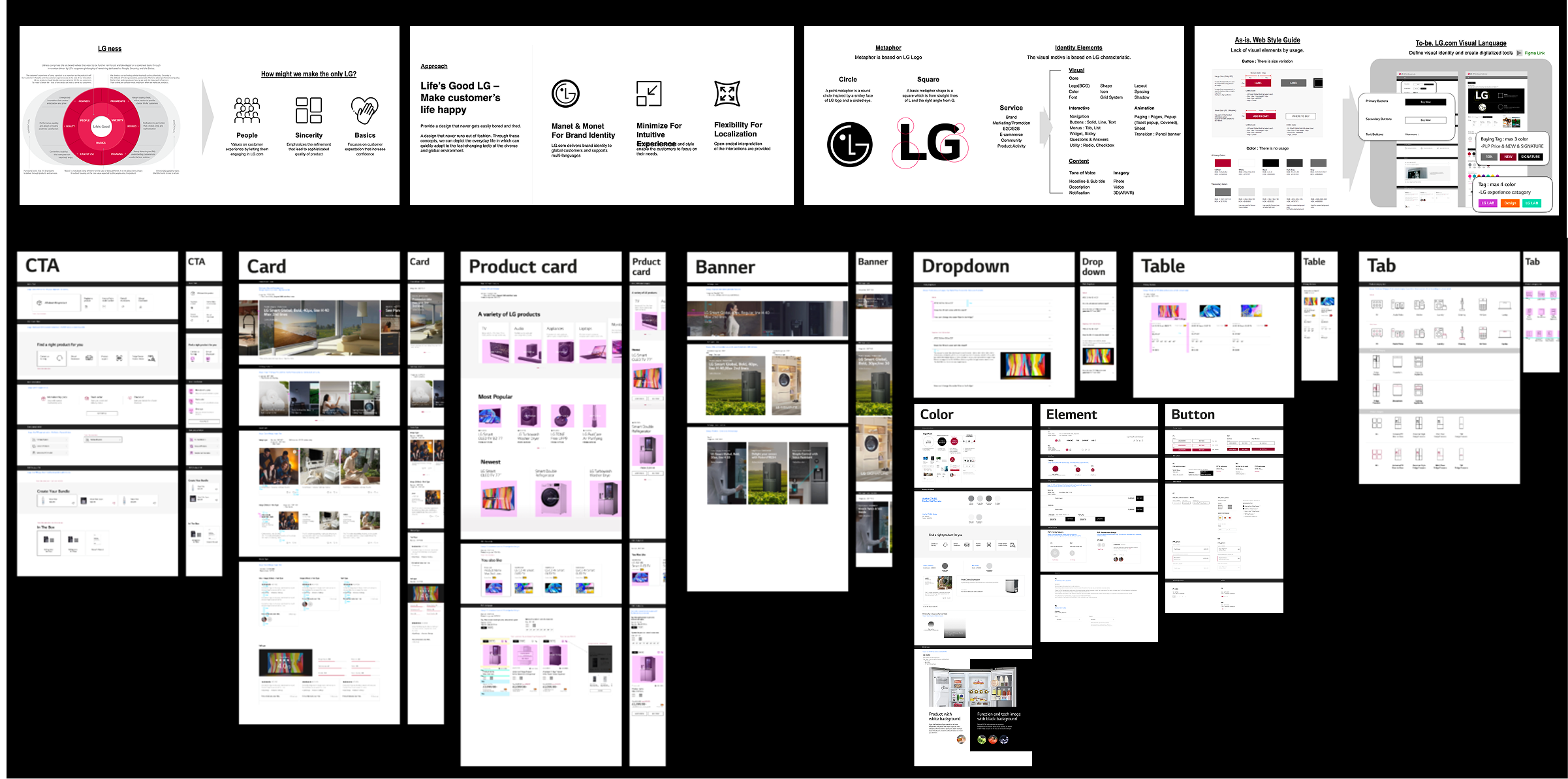
Crafting a Global UI Language from LGness

Design Approach
·
LGness Foundation: Brand philosophy translated into design principles
·
BI Metaphor: The LG logo as a visual reference for UI language
·
Global UI System: Reusable components and guidelines for global markets
page2 image12

Reflections

Biggest thing

A key learning from this project is that seamlessly introducing new experiences while maintaining user familiarity remains
one of the most challenging aspects of UX design.

01. Global Design Workshops for Strategic Alignment :

A global roadshow across regional entities helped align strategy while gathering valuable regional feedback. Design sync-up workshops with the U.S subsidiary focused on brand identity and consistency standards, ensuring a globally cohesive brand experience.

The collaborative, real-time design process exposed us to diverse perspectives and broadened our design thinking.

02. The Power of Early Validation :

Early concepts were validated through Miniwow. A small-scale project that gave us the confidence to move forward with the full design direction.

03. Limited direct metric validation:

Early concepts were validated through Miniwow. A small-scale project that gave us the confidence to move forward with the full design direction.