
01. CONTEXT
Understand
what’s driving the rate.
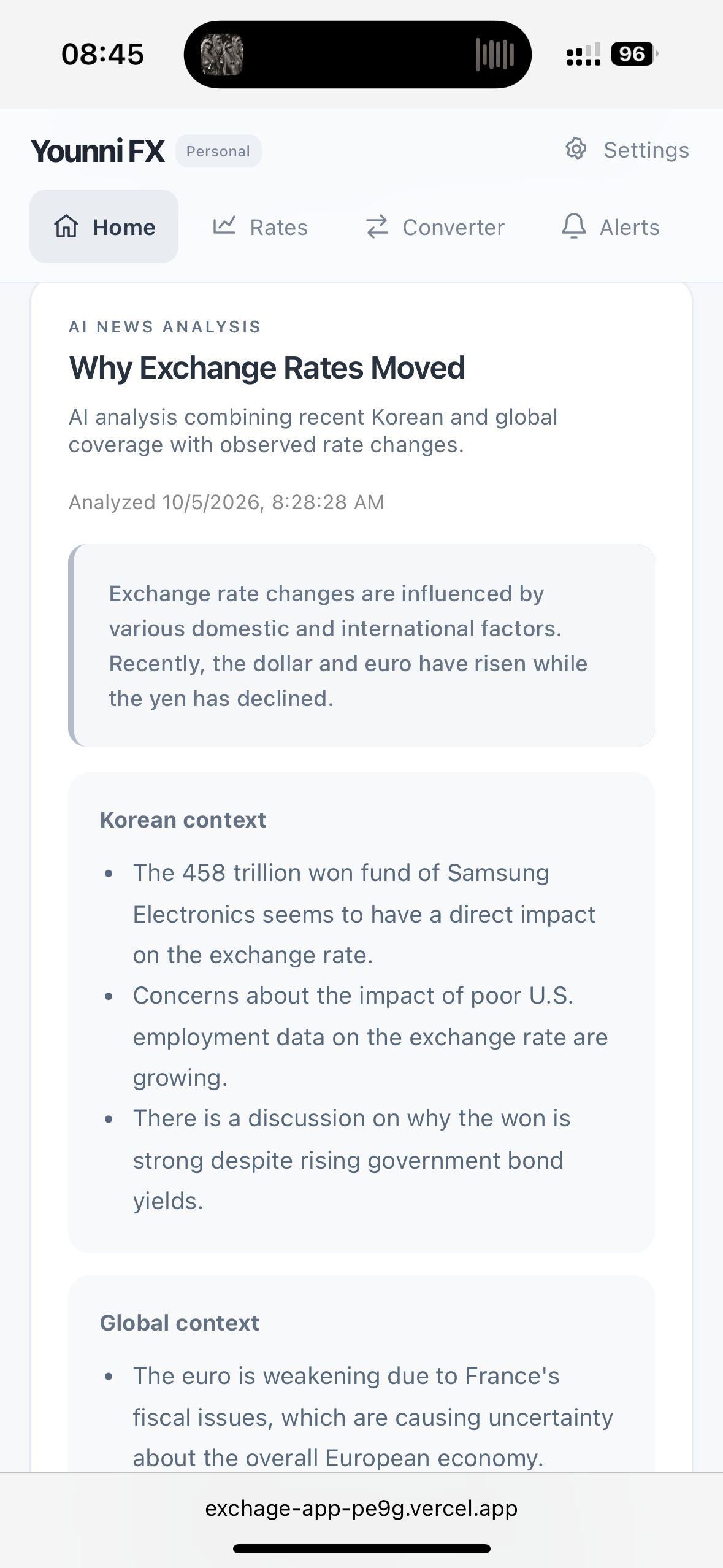
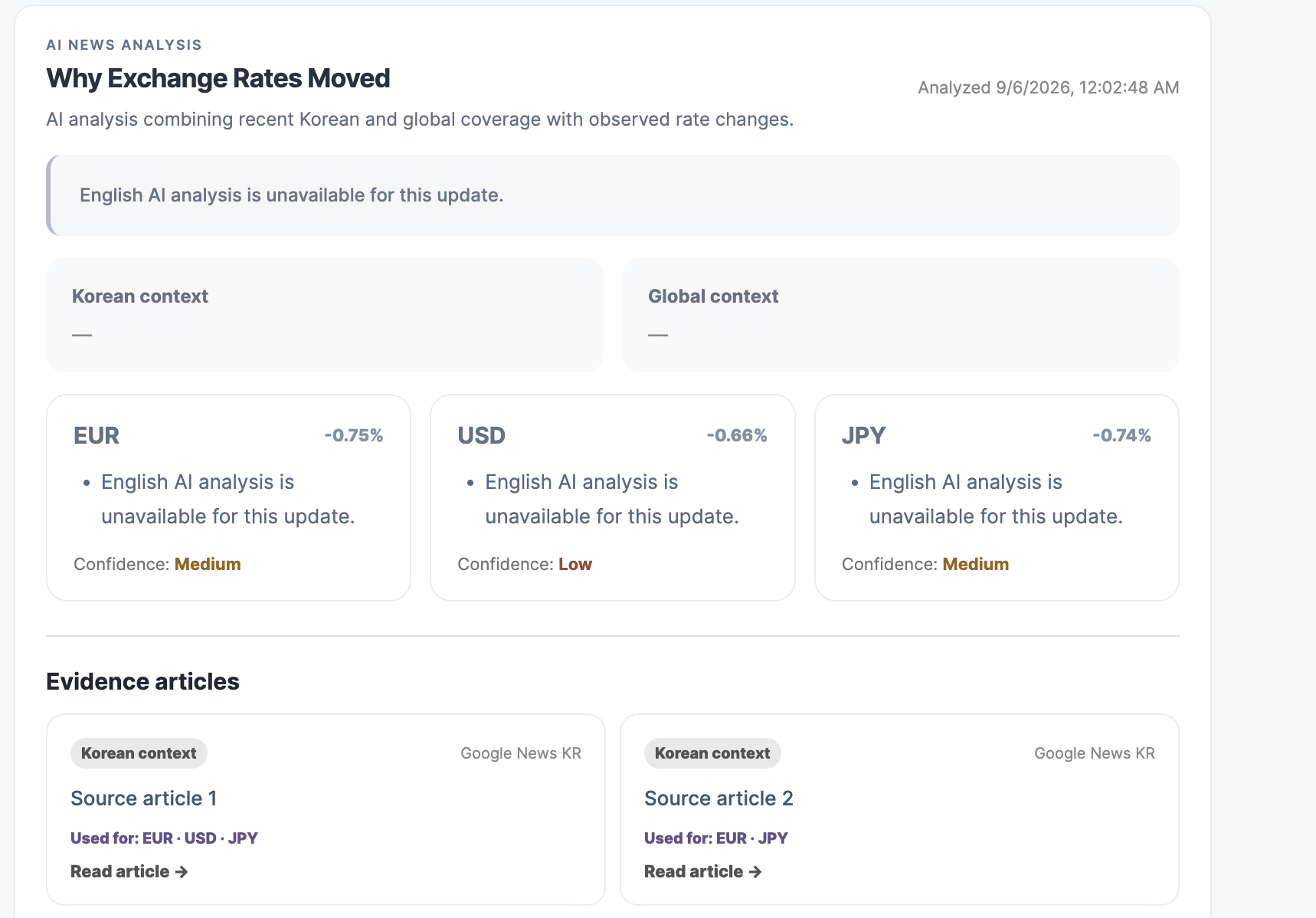
Bring relevant news alongside exchange-rate movements to help explain the changes.
Why did the rate move? Based in IrelandAbout me
AI-assisted MVP development
Impact overview
The product was designed to make ongoing rate monitoring easier to manage.
Intended benefits; measured impact is not documented.
Why I built it?
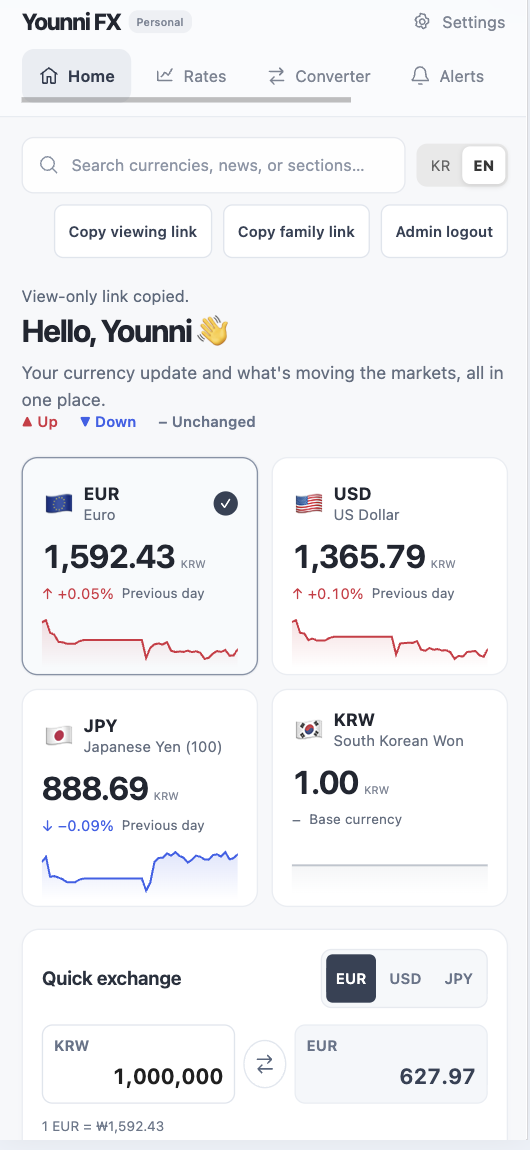
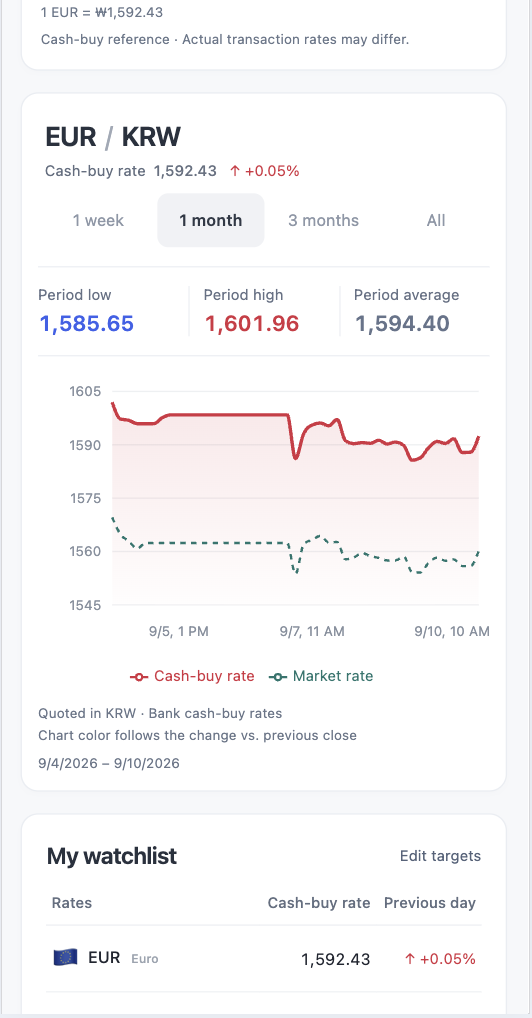
I started with a personal need. I wanted to see the rate I would actually pay
when buying foreign cash, how it was changing, and what was driving those changes all at a glance.
That meant bringing bank cash-buying rates,
exchange-rate trends, and relevant news into one clear view.


What I found
Starting from my own currency-exchange needs, I identified three priorities.
01. CONTEXT
Bring relevant news alongside exchange-rate movements to help explain the changes.
Why did the rate move?02. COMPARISON
Compare conversion rates across my preferred banks and providers to identify the most cost-effective option.
Which service should I use?03. CONTROL
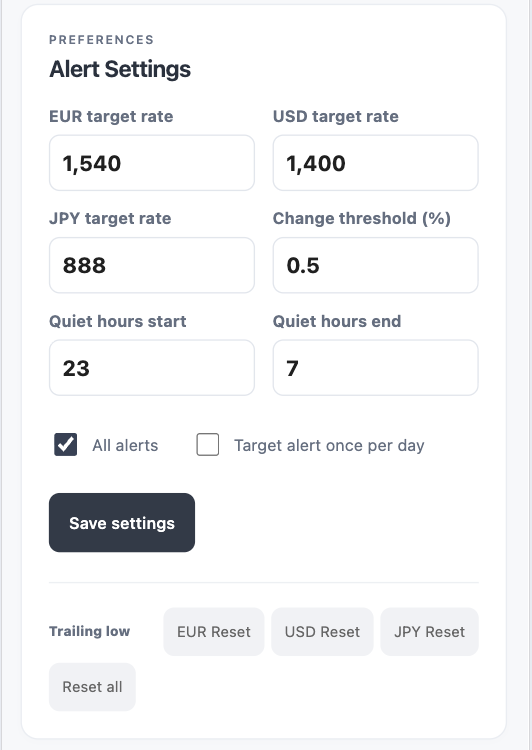
Make alerts easy to configure so I can respond to favorable rates without constantly checking.
Has it reached my target?How I tackled the problem
I structured the dashboard around four needs: current status, trends, settings, and recent alerts.
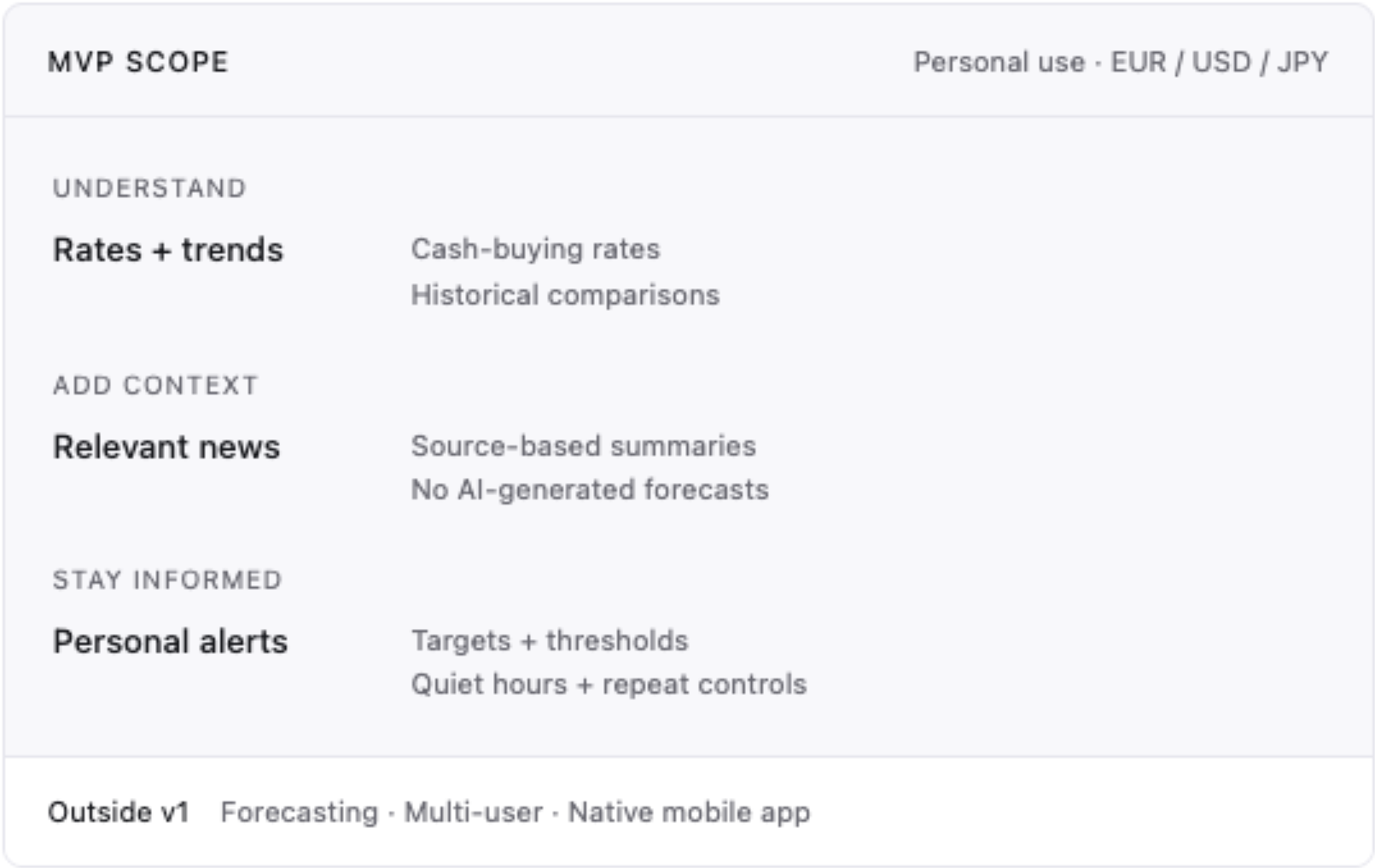
01 · DEFINE
I scoped a personal-use MVP for EUR, USD, and JPY
bank cash-buying rates, historical trends, news context, and configurable alerts.
Price forecasting, multi-user support,
and a dedicated mobile app stayed outside the first version.
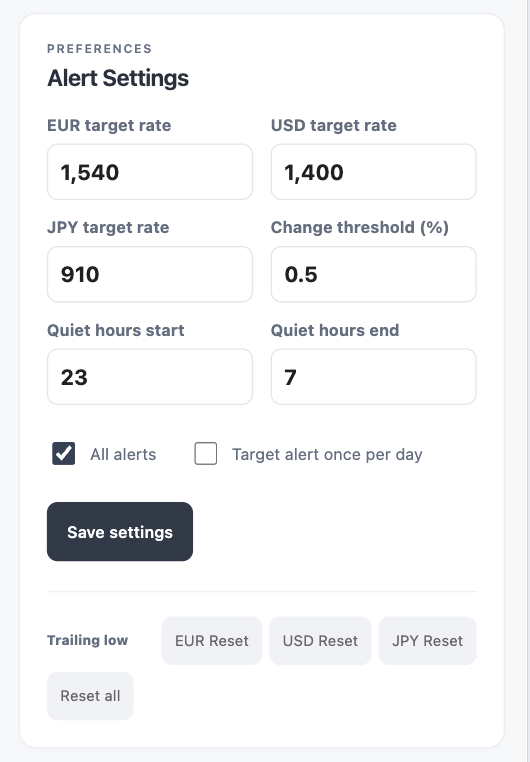
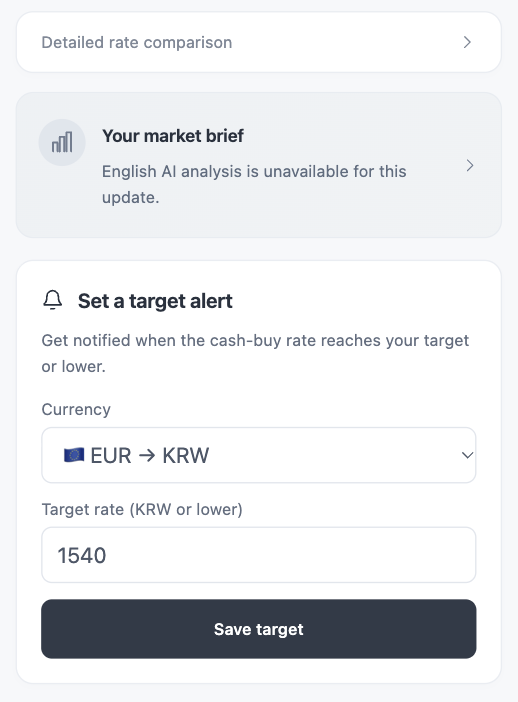
02 · GIVE CONTROL
I defined controls for target rates, daily change thresholds, quiet hours, and repeat notifications.
Settings feedback would explain when changes take effect.
Alerts triggered during quiet hours would be held
for the morning digest.
03 · CONNECT
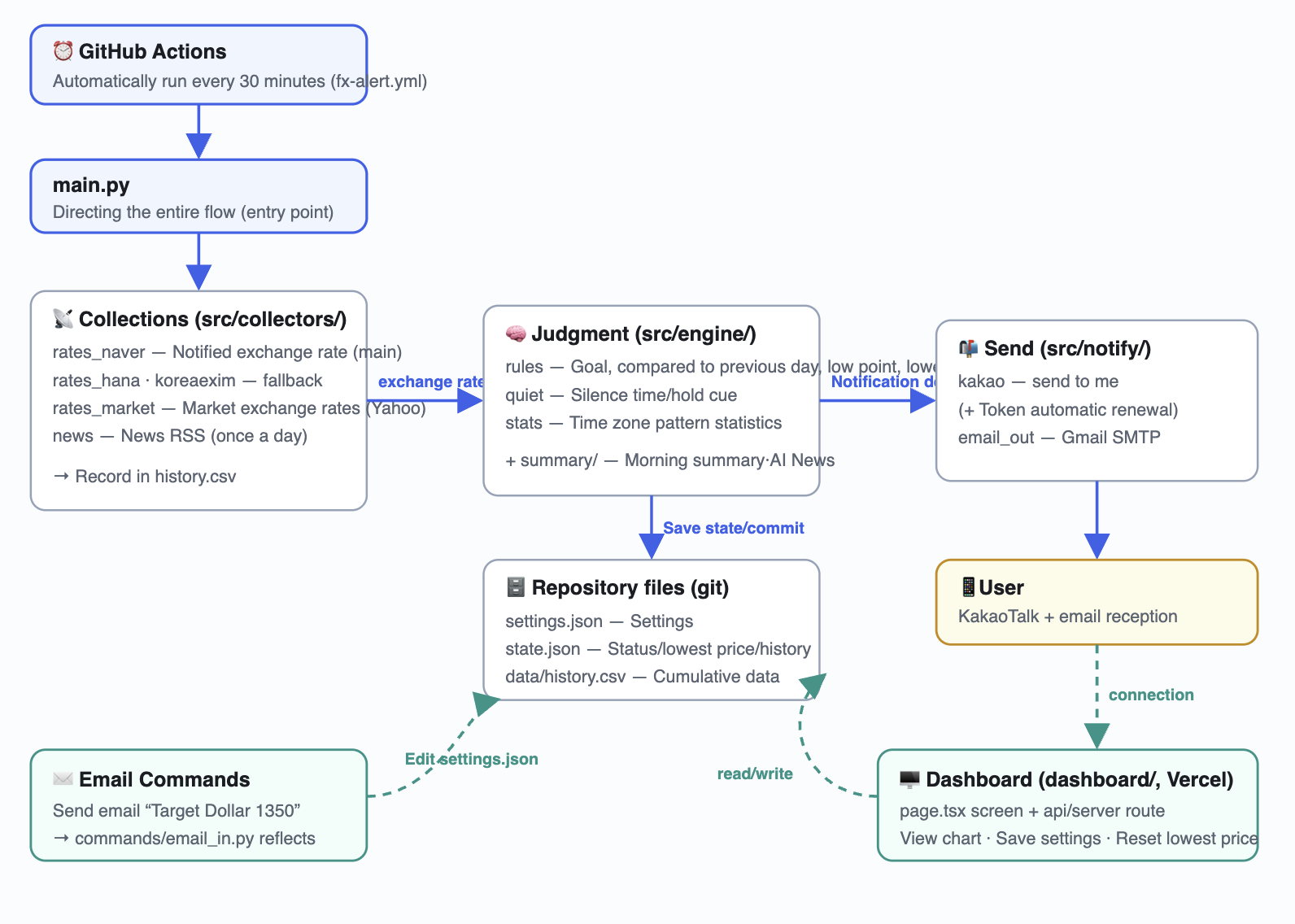
I mapped how rate data, user preferences, and alert rules would work together. The plan separates scheduled rate checks from the daily news summary, with fallback behavior for collection and delivery failures.
Outcome
The final design brings cash-buying rates, trends, and news into one dashboard, with personal targets and
configurable alerts to support the next step.
01. SET YOUR TARGET
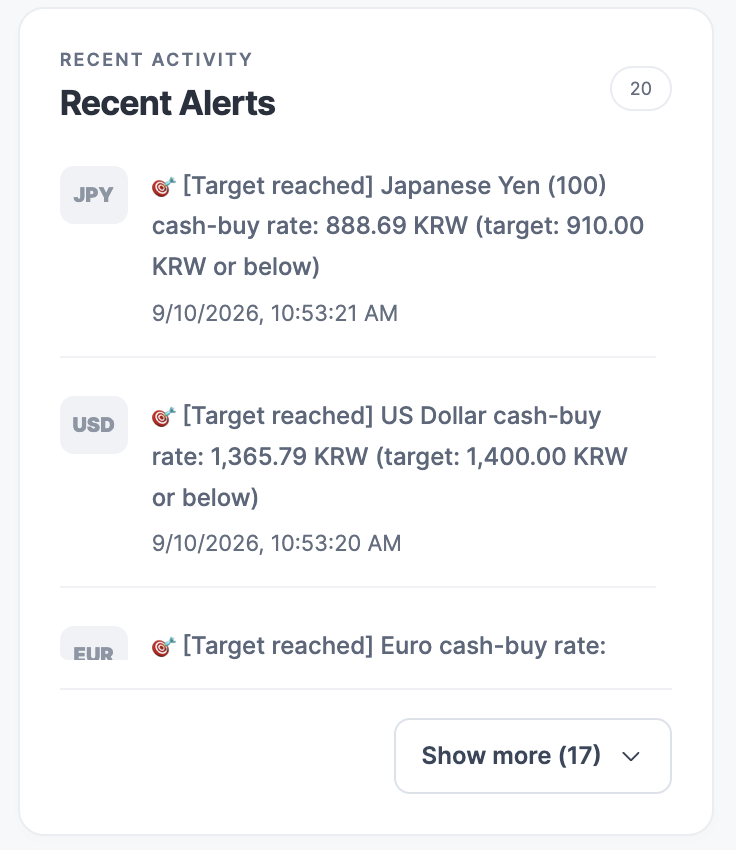
02. GET NOTIFIED
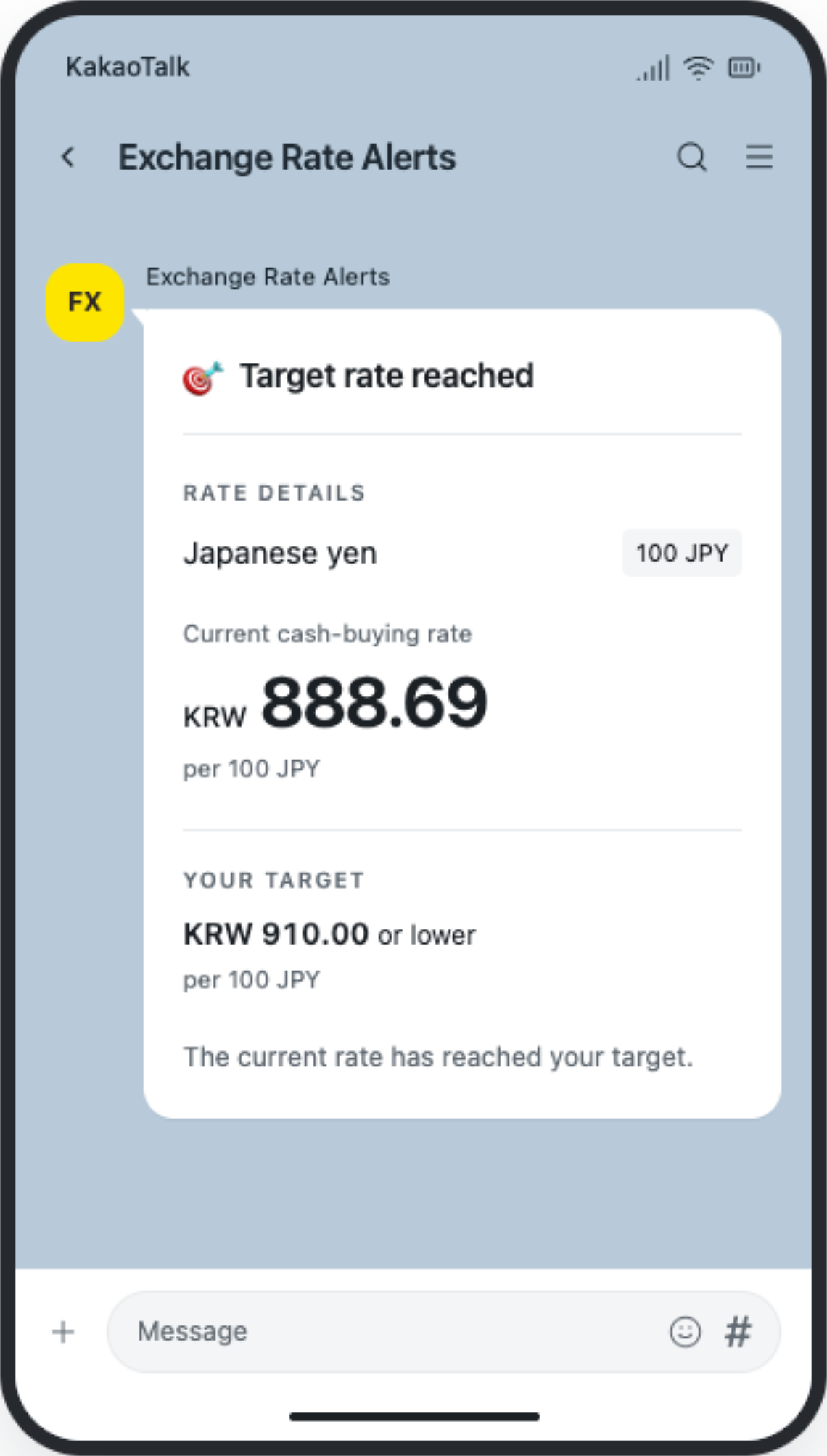
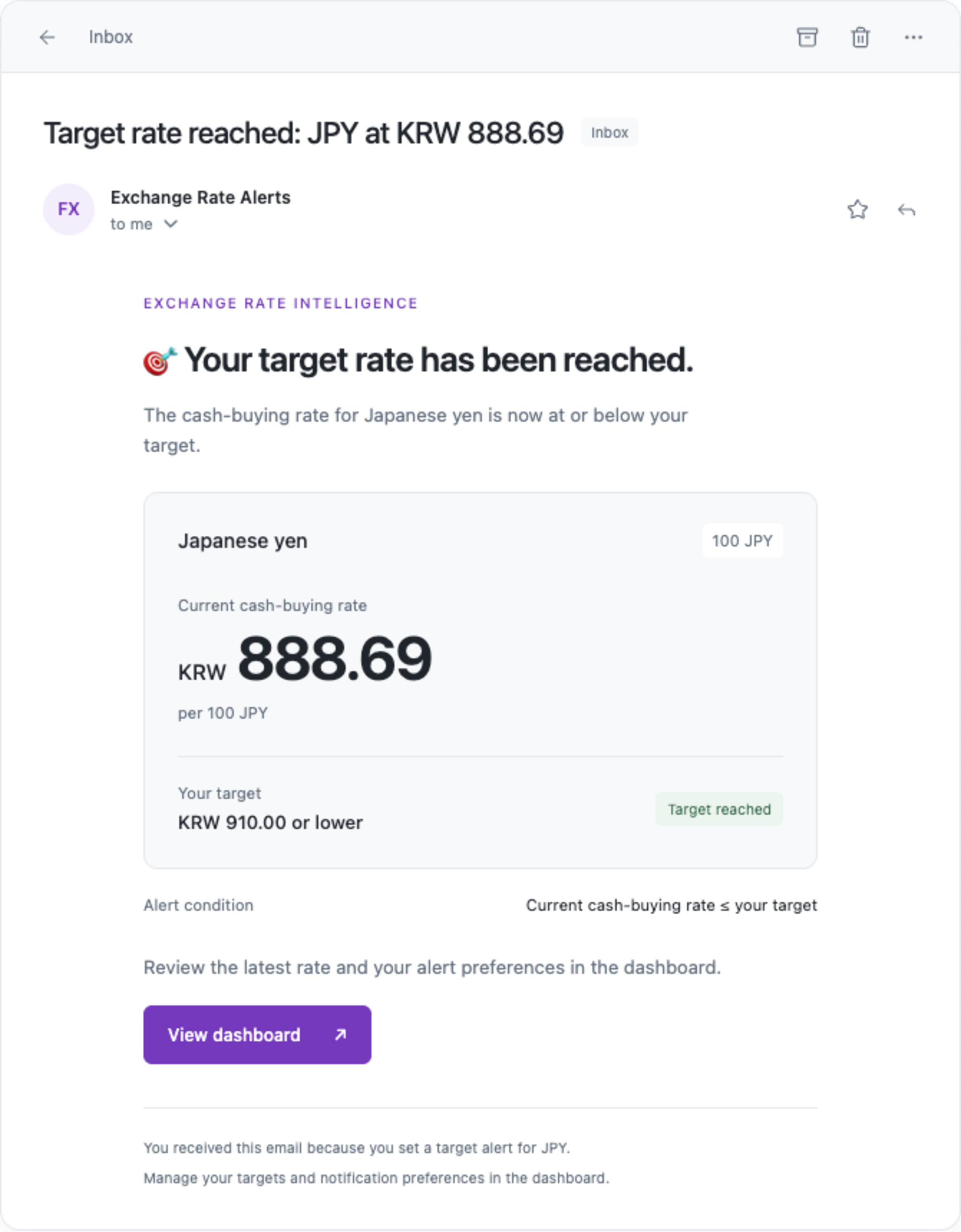
Reflections
I built this project end to end, using Claude, Codex, GitHub, and Vercel to connect product planning with implementation, API integration, and deployment. Rather than launching it publicly, I shared it with people I knew, gathered feedback, and continuously refined the experience based on their pain points.
Their feedback also helped me simplify the product by scaling back unnecessary features and focusing on what users actually needed.
UI refinements and API issues across different locations reinforced the importance of continuous iteration and broader testing.
My next step is to observe real usage patterns and prioritize improvements to usability and reliability, and ultimately evolve the product into a fully functional financial service that enables users to exchange currencies and complete real transactions.